For most of my career, “search” has meant one thing to most of the people I’ve worked with: Google.
That was never quite true, and it’s even less true now. Customers ask ChatGPT for recommendations, search Amazon before they search the web, and find products on TikTok they never knew they wanted.
Yet most brands still look at discovery through whichever channel their team happens to own.
So I’ve built something to help with that. It’s called The Many Front Doors, and the full framework now lives on my site.
Why I Built It
I’ve been talking about breaking down silos between marketing channels for a while now, on podcasts, on stage and with clients. The problem is that “look beyond your channel” is easy to agree with and hard to act on. Without a way to decide where to look, it quickly turns into “try to be everywhere”, which helps nobody.
I’ve also long thought SEOs are well placed to lead this. Our work already touches audience research, user journeys, content and conversion, so we’re used to seeing how the pieces connect.
A lot of the thinking comes from my time working in China. There, search was never one place. Baidu mattered, but so did WeChat, Xiaohongshu, Douyin and the big marketplaces, and now AI assistants too. Each had its own rules, and no single team owned them all. Working across them was simply part of the job.
Watching the Western markets move the same way over the last couple of years, it felt like time to turn that way of working into something others could use.
What It Does, In a Nutshell
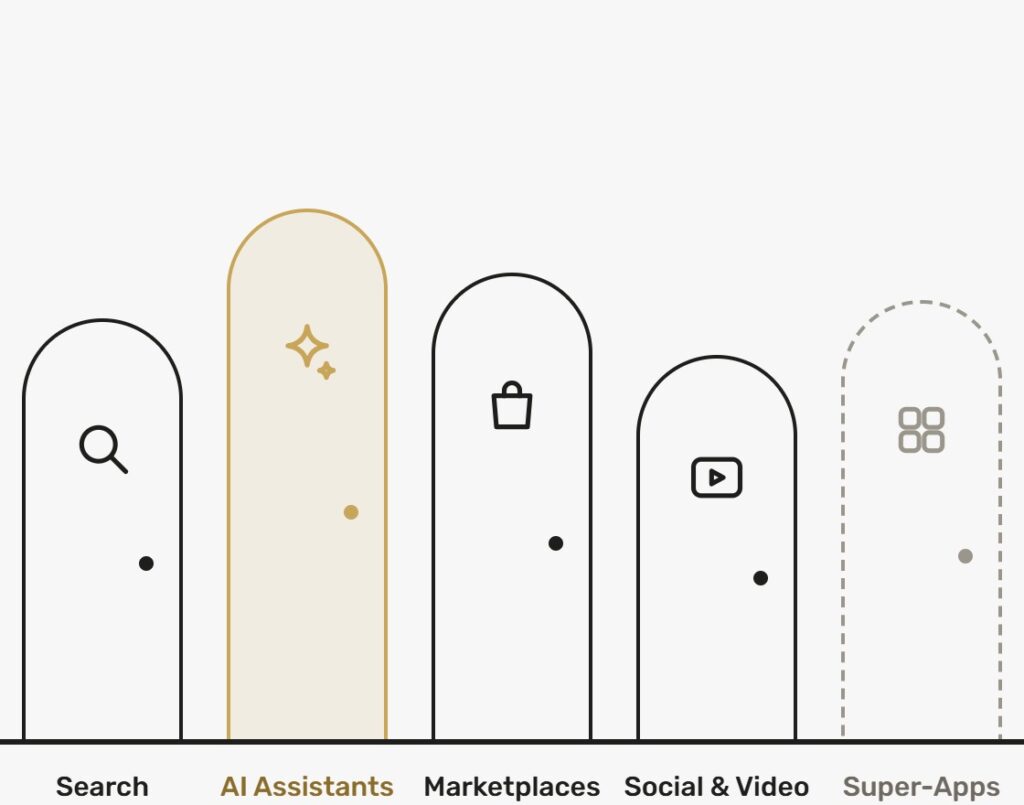
The Many Front Doors does two things. It helps a brand see every “door” its customers use to discover, compare and choose, then decide deliberately which ones to invest in.
The starting doors are search engines, AI assistants, marketplaces, social and video, and super-apps, though the list is flexible for each brand.
Each door is scored from 0 to 3 on four questions, always in the same order:
- Footfall: do our customers use this door?
- Visibility: are we there when they arrive?
- Format: is our content in the shape this door needs?
- Levers: can we influence it ourselves?
The first question a door fails gives it a type: Not our door, Open door, Wrong format, Shared door or Strength. Each type comes with a clear next step, the people to involve and what to measure.
The full framework walks through it all, with a worked example and a free scorecard you can download and run on your own brand.
Try it, and Tell Me What You Think
I shared an early draft with a few people in the industry whose opinions I trust, and it’s better for their feedback.
I’d love the same from you. Run the scorecard on a brand you know well and let me know where it works, where it doesn’t, and which doors I’ve missed.
And if you’d like help running a Many Front Doors review for your own brand, get in touch.
Read the full framework linked to above and download the scorecard here.